OBJECTS
GLASS
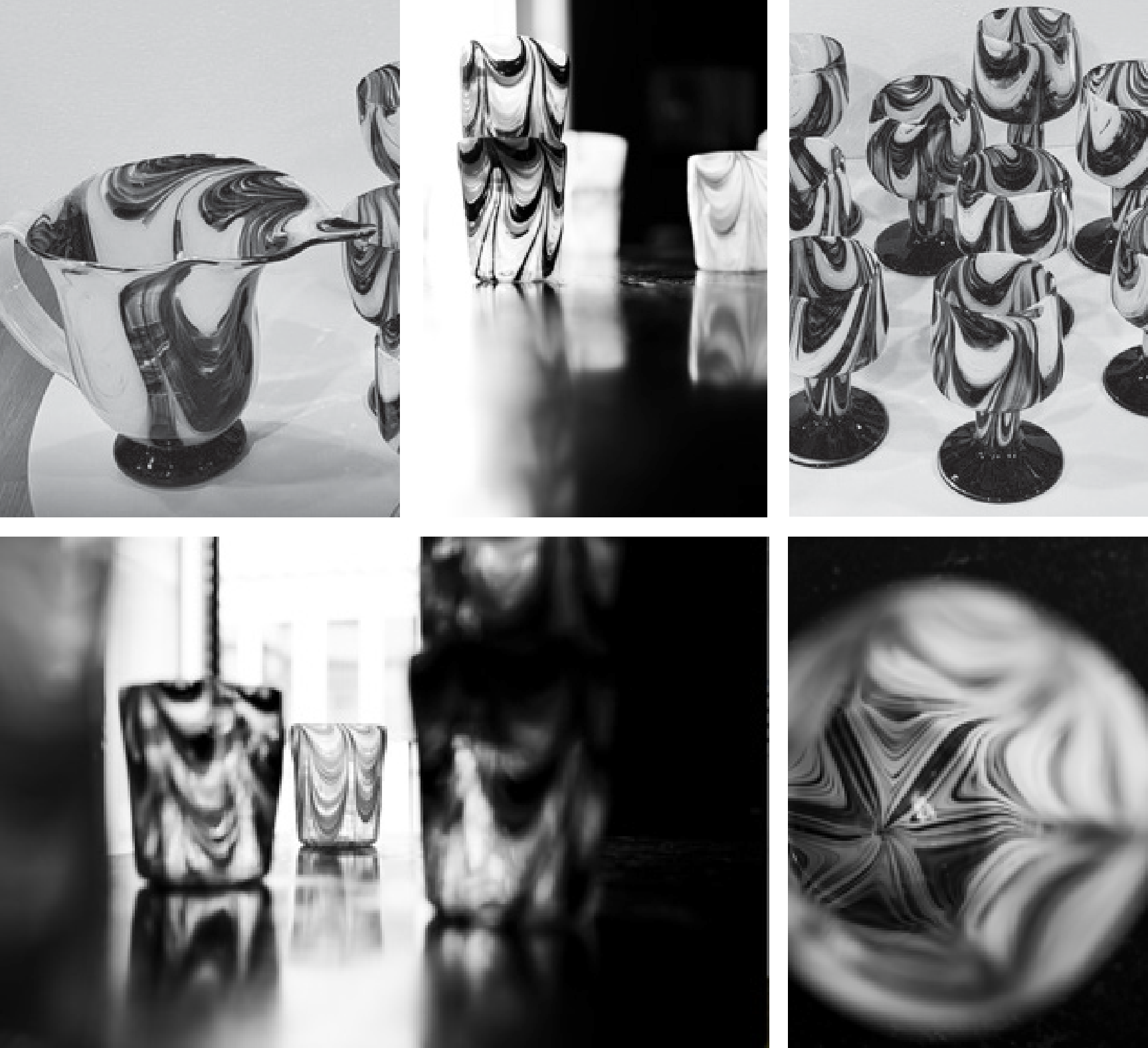
Water, Fire, Air, and Earth merge through human breath. In Murano, Venice, glassmakers honour traditions linking us to our ancestors. For over ten years, we have collaborated with Muranti Glassmasters, creating drinkware and a vase/lantern collection. The “Ziz” collection features a Phoenician chevron design, a V-shaped motif present in my rugs and many cultures, including Phoenician art. Their craftsmanship showcases geometric patterns found in pottery, textiles, and architecture, resonating with my home, Palermo, a Phoenician city founded in the 8th century BC, known as Ziz (meaning “flower” in Punic).
“
When inspiration strikes, I capture those moments with my camera. I’m particularly drawn to Murano glass with beautiful Phoenician designs, ideal for wine and water glasses, as well as stunning jugs.
MARBLE
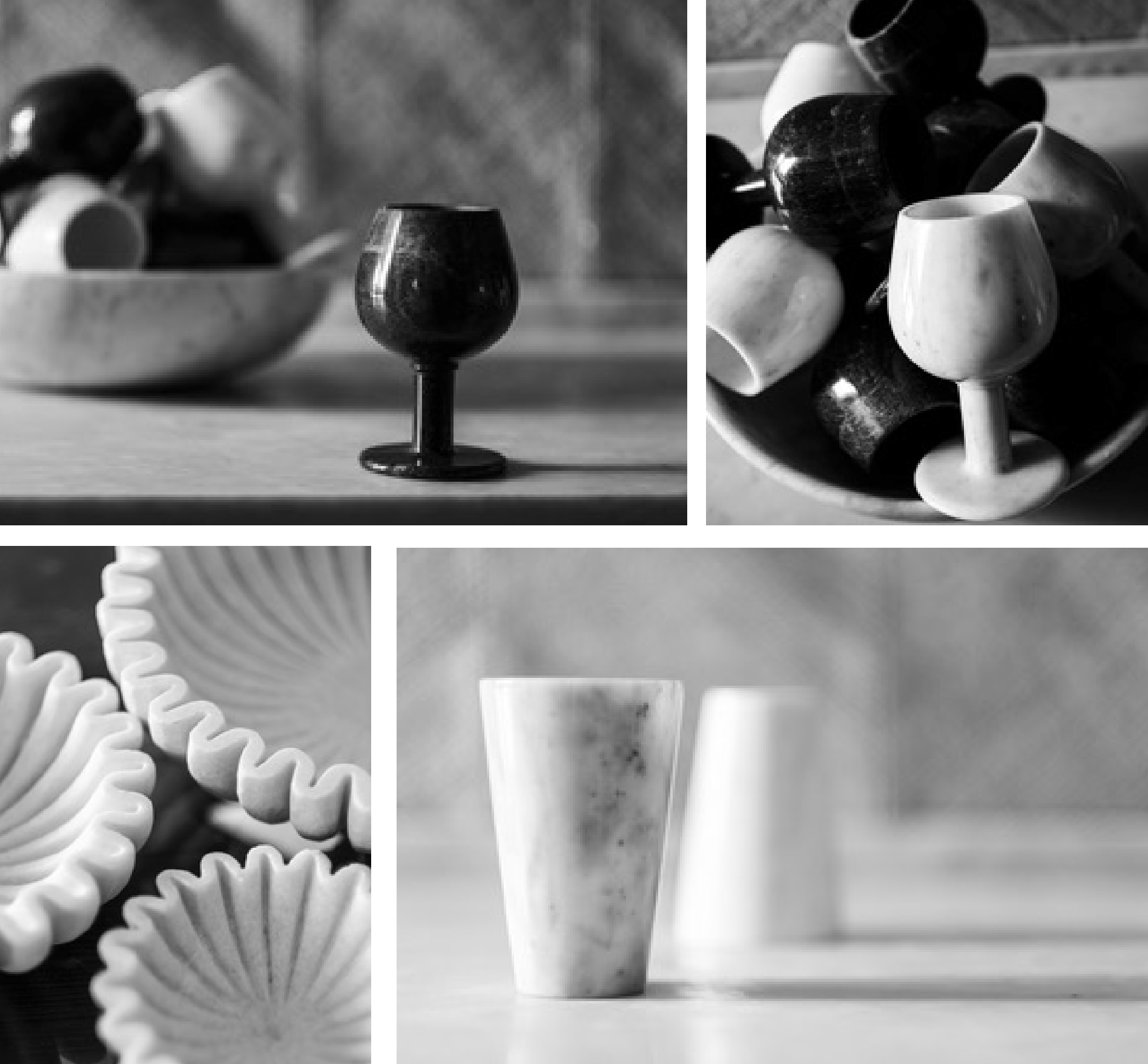
Makrana, in Rajasthan, is India’s oldest marble quarry, known for its white marble and rich carving heritage. Artisans extract and transport marble to workshops, creating unique products. For over a decade, we’ve partnered with these workshops to develop a diverse collection of handcrafted drinkware and tableware.
“
The palette is light and dark, black and cream. Natural and neutral yet also rich with a cinematic or graphic
quality.
CERAMICS
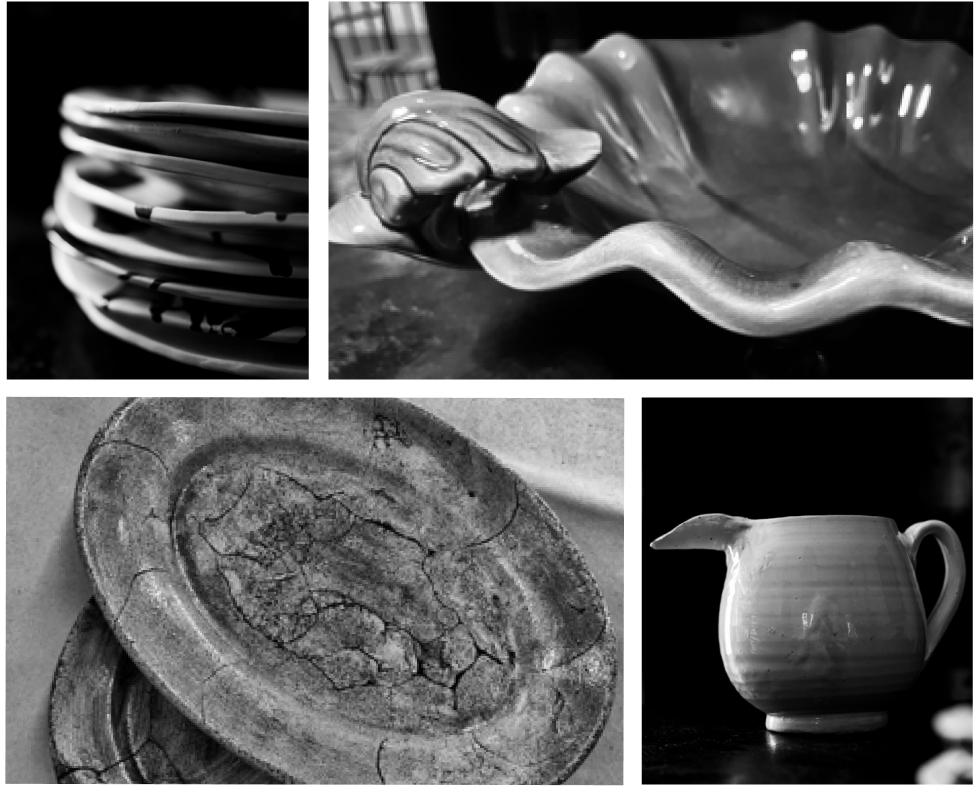
Santo Stefano di Camastra is a Sicilian village situated at the base of the Nebrodi Mountains, known for its refined and historical tradition of clay harvesting and ceramics.
Artisans in the Stefanese tradition harvest clay in summer, transport it by donkey, and refine it by removing limestone debris. Traditionally, they pounded the clay barefoot and stored it in cool places covered with damp rags. The striped
designs and black crackle ceramics revive this ancient technique. One favorite studio uses Stefanese clay, known for its cream to rose shades, applying traditional methods passed down through generations.
“
Lavor Ombra is about much more than design; it is an obsession with the production. I have both sides –
the artistic design and the substance – in my playbook.
METAL
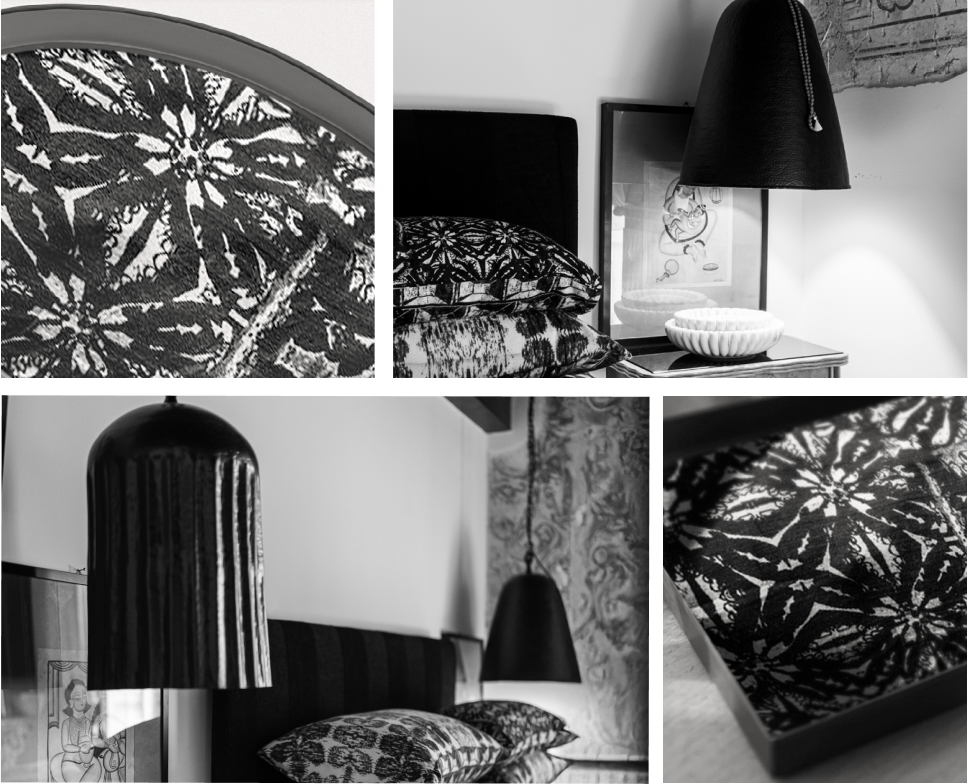
Moradabad, Uttar Pradesh, India, known as Brass City or Pital Nagri, flourished in brassware in the early 19th century due to British support that opened international markets. Artisans from Varanasi, Lucknow, and Agra enriched the local community. By the 1980s, the industry expanded to iron and aluminum, adopting modern techniques like electroplating, lacquering, and powder coating. Inspired by the area’s craftsmanship, we added hand-crafted lanterns and tray sets to our collection.
“
That was my art school. Working with nature’s forms – flowers leaves branches – taught me about textures and contrasts and how to put things together.